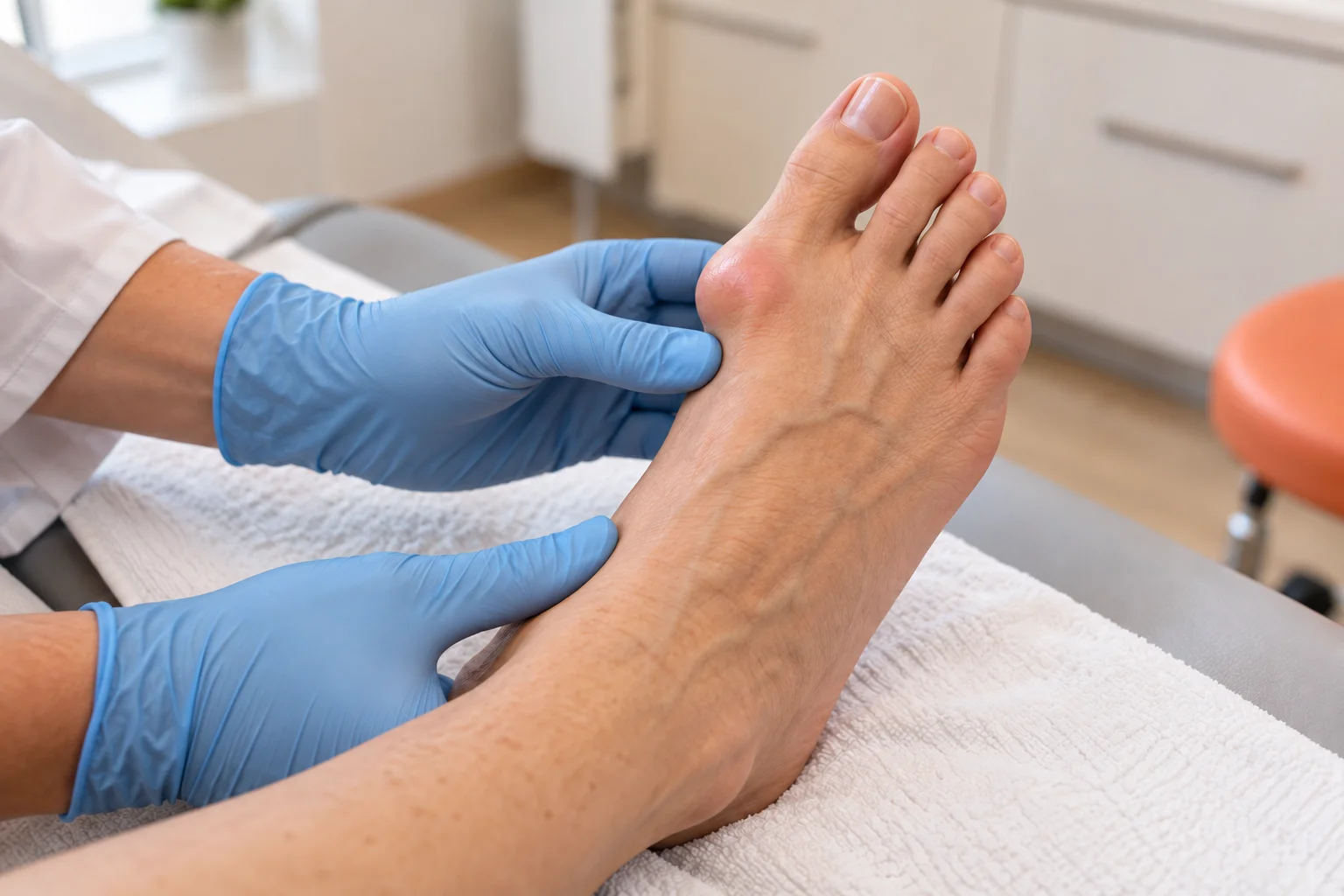
Understanding bunion symptoms and treatment can help you decide when to seek care for pain near the big toe. A bunion changes the alignment of the joint at the base of the toe. The toe leans toward the smaller toes, and a bump becomes visible along the inside of the foot.
The size of that bump does not tell the whole story. Treatment should consider pain, movement, shoe fit, and your daily activities.
What symptoms can a bunion cause
You may notice:
- Soreness over the bump or around the big toe joint.
- Redness or irritation where shoes rub.
- Difficulty finding shoes that fit comfortably.
- A stiff or painful big toe.
- Crowding, rubbing, or calluses between the toes.
Some bunions do not hurt. Others make walking or standing uncomfortable. Symptoms can become more noticeable in narrow shoes or after long periods on your feet. [1,2]
Is every painful big toe a bunion
No. Gout, arthritis, injury, and other problems can also cause pain around the big toe joint.
A sudden, very painful, red or hot joint needs prompt medical assessment, especially if you also have a fever or a wound. Do not assume that a familiar bump explains a new or severe symptom. [5,6]
How is a bunion diagnosed
A clinician will examine the toe, check movement, and ask how the problem affects you. X-rays may help show joint alignment and arthritis.
Tell your podiatrist what you have already tried. Be specific about your limitations: a work shoe you can no longer wear, a walk you cannot finish, or pain that returns despite changing footwear. [2]
Nonsurgical bunion treatment
Early care often focuses on reducing pressure and improving comfort. Options may include wider shoes, protective padding, or an insert selected for your needs. A spacer may help some people, but it needs to fit without squeezing the toes.
These approaches can relieve symptoms. They do not permanently put the joint back into its usual alignment. Stop using a pad or device that worsens rubbing or pain, and ask for guidance about fit. [1,4]
If medication is part of the plan, ask your clinician or pharmacist what is appropriate for your health and other medicines. No single treatment is right for every person.
When is bunion surgery considered
Surgery may be discussed when ongoing pain limits everyday activities and suitable nonsurgical care has not helped enough. It is generally intended to improve pain and function rather than appearance alone.
The procedure depends on the joint changes and the person’s needs. Discuss the expected benefit, possible complications, limits on walking, and time away from work. Risks can include infection, nerve symptoms, stiffness, recurrence, and problems with bone healing. Recovery varies by procedure and health factors. [3]
A consultation does not commit you to surgery. It should help you understand the available choices.
What can you do before your appointment
Bring a list of your symptoms and treatments you have tried, along with shoes that cause problems. Think about the activity you most want to do comfortably.
You can ask, “What can we try first, and how will we know whether it is helping?”
Bunion treatment in St Augustine
Foot & Ankle Specialists of Eastern Florida provides care for foot and ankle concerns. Learn about bunion treatment or request an appointment to discuss big toe joint pain.
Related reading: Explore footwear and everyday bunion prevention tips.
This article is for general education and does not replace an individual medical evaluation.
Medical sources
[1] ACFAS Foot Health Facts — Bunions
[3] AAOS OrthoInfo — Bunion Surgery
[4] APMA — Bunions
[5] NIAMS — Gout